Dear Friend,
I’m writing you this letter because, even though I constantly post and speak about the importance of men showing their emotions, especially during Men’s Mental Health Month, I have realized something uncomfortable.
I still don’t know what to do once that happens.
I’ve advocated for men to have safe spaces. I’ve nearly lost my voice speaking about men’s mental health. Not nearly as loudly as I do for women’s mental health, of course, but I digress.
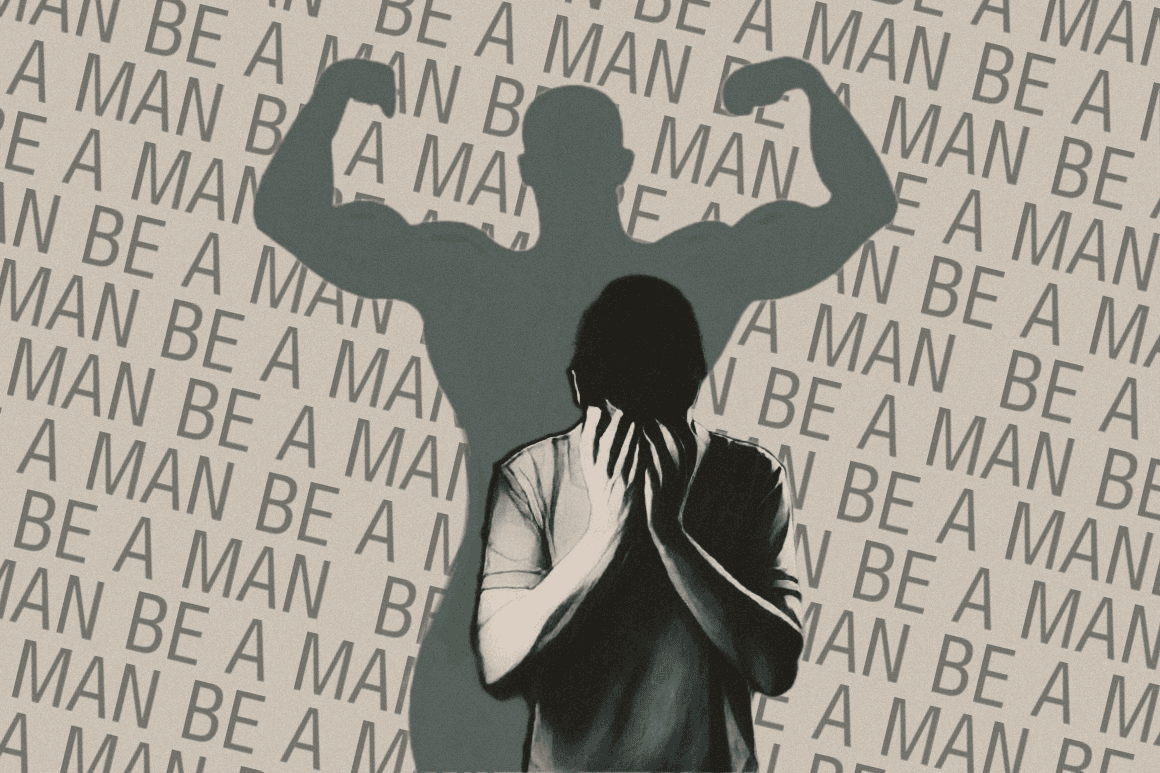
I was socialized to see men as emotionally stunted. Somewhere along the way, I was taught that after the age of twelve, boys start functioning, eventually being emotionally stunted .
The books I grew up reading portrayed men as stoic heroes. The media called them logical. Society praised them for staying composed.
Then I started reading different books.
Books written by women peeled back the layers of masculinity and revealed what often sat underneath: fear mistaken for anger, anxiety disguised as control, grief with nowhere to go. They reminded me that emotional deprivation doesn’t just hurt men; it hurts everyone around them.
We’ve slowly begun accepting that no human being is purely logical. After all, punching a wall when your football team loses is an emotion.
So is silence.
So is withdrawal.
So is rage.
Yet all this new knowledge has not undone years of socialization.I realized that the week you lost your father, a week after I lost my mother and yet your grief felt unfamiliar
I have held my girlfriends through grief. I’ve wiped tears from their faces, sat beside them in silence, let them sleep in my home because being alone felt unbearable. But with you… I didn’t know what to do.
It’s Men’s Mental Health Month, and I don’t know how men grieve. I don’t know how to build community around male grief. I don’t know how to hold a grieving man. I don’t know what to do with his tears. I don’t even know how to say, “I’m sorry,” in a way that feels like enough.
No one ever taught me the language of grieving men. And that realization has unsettled me. It makes me feel like I’ve failed as a friend. Even more, it makes me question myself as a psychologist.
How do we dedicate an entire month to men’s mental health and still avoid teaching ourselves how to respond when men finally trust us enough to be vulnerable?
How have we accepted that men need safe spaces without asking whether the rest of us know how to make those spaces safe?
Maybe this is where feminism matters more than we acknowledge.
Not because it asks men to cry but because it asks all of us to reject a system that decided grief belongs differently depending on who is carrying it.
So, friend, this letter was meant to be an apology, an apology for not knowing how to show up for you the way I know how to show up for the women in my life. Instead, it became something else. A confession.
That despite all my education, all my advocacy, and all my certainty, I have found one of my own blind spots and perhaps that is where my Men’s Mental Health Month begins.
Not with another post.
Not with another campaign.
But with learning the language of men before asking them to speak it.
… your loving friend.